

Cart
0
💎 How to Identify a Lab-Grown Diamond
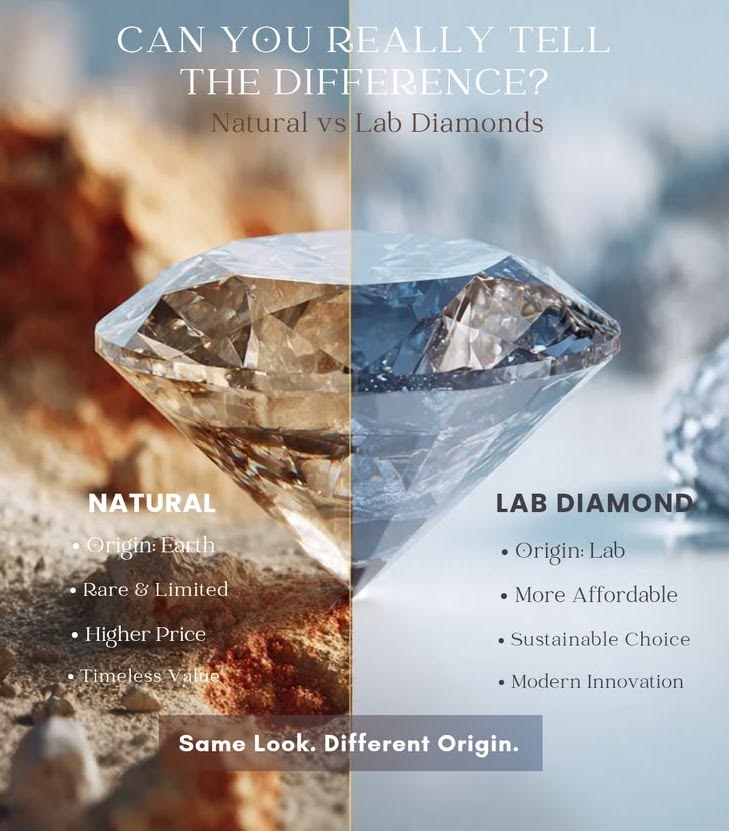
As lab-grown diamonds become increasingly popular, many buyers want to know how to identify them. Since lab-grown diamonds have the same chemical composition, brilliance, and durability as natural diamonds, distinguishing between them can be challenging without specialised equipment. Understanding the key characteristics and certification details can help buyers make informed and confident jewellery purchases.
💍 Are Lab-Grown Diamonds Real Diamonds?
Yes, lab-grown diamonds are 100% real diamonds.
They have:
The same chemical structure as natural diamonds
The same hardness and durability
The same brilliance and sparkle
The same crystal composition
Because they are real diamonds, they look almost identical to natural diamonds when viewed with the naked eye.
✨ Can You Tell the Difference by Looking?
In most cases, no.
Lab-grown and natural diamonds share:
Identical sparkle and fire
Similar colour and clarity grades
The same transparency and brilliance
The same appearance in jewellery
Even experienced jewellers cannot reliably identify a lab-grown diamond by sight alone.
💎 Check the Diamond Certificate
One of the easiest ways to identify a lab-grown diamond is by reviewing its certification.
A diamond certificate usually includes:
Diamond type
Carat weight
Cut grade
Colour grade
Clarity grade
Unique identification number
The grading report provides important information about the diamond's characteristics and origin.
🌟 Look for Laser Inscription
Many lab-grown diamonds feature a tiny laser inscription on the girdle.
This inscription may include:
Certificate number
Identification code
Laboratory reference
The engraving is microscopic and usually requires magnification to view clearly.
Laser inscriptions provide an extra level of authenticity and traceability.
🔍 Professional Diamond Testing
Professional jewellers and gemological laboratories use advanced equipment to identify lab-grown diamonds.
They may examine:
Crystal growth patterns
Light behaviour
Internal characteristics
Optical properties
These specialised tests can accurately determine whether a diamond is lab-grown or natural.
💰 Why Identification Matters
Understanding the origin of a diamond helps buyers make informed decisions.
Benefits include:
Knowing exactly what you're purchasing
Comparing diamonds more accurately
Ensuring transparency and confidence
Making purchases that fit your budget and values
Whether natural or lab-grown, choosing a certified diamond ensures peace of mind.
💖 Common Myths About Lab-Grown Diamonds
Myth: Lab-grown diamonds are fake.
Fact: Lab-grown diamonds are real diamonds with the same physical and chemical properties as natural diamonds.
Myth: You can easily spot a lab-grown diamond.
Fact: Most lab-grown diamonds look identical to natural diamonds.
Myth: Lab-grown diamonds do not sparkle as much.
Fact: Lab-grown diamonds have the same brilliance, fire, and sparkle as natural diamonds.
Understanding these facts helps buyers shop with confidence.
🌱 Why Buyers Choose Lab-Grown Diamonds
Many modern buyers prefer lab-grown diamonds because they offer:
Beautiful sparkle and brilliance
Excellent durability
Affordable luxury
Sustainable jewellery options
Larger carat sizes within budget
These advantages make lab-grown diamonds one of the fastest-growing choices for engagement rings and fine jewellery.
💎 Why Choose Czed Jewels
At Czed Jewels, we offer premium lab-grown diamond jewellery crafted with exceptional attention to detail. Our collection combines elegant design, certified quality, and modern craftsmanship to help you celebrate life's most meaningful moments with confidence.
✨ Conclusion
Identifying a lab-grown diamond isn't always possible with the naked eye because it shares the same beauty, sparkle, and durability as a natural diamond. The best ways to identify a lab-grown diamond are through certification, laser inscriptions, and professional testing. By choosing certified jewellery from a trusted retailer, you can enjoy complete confidence in your purchase.


